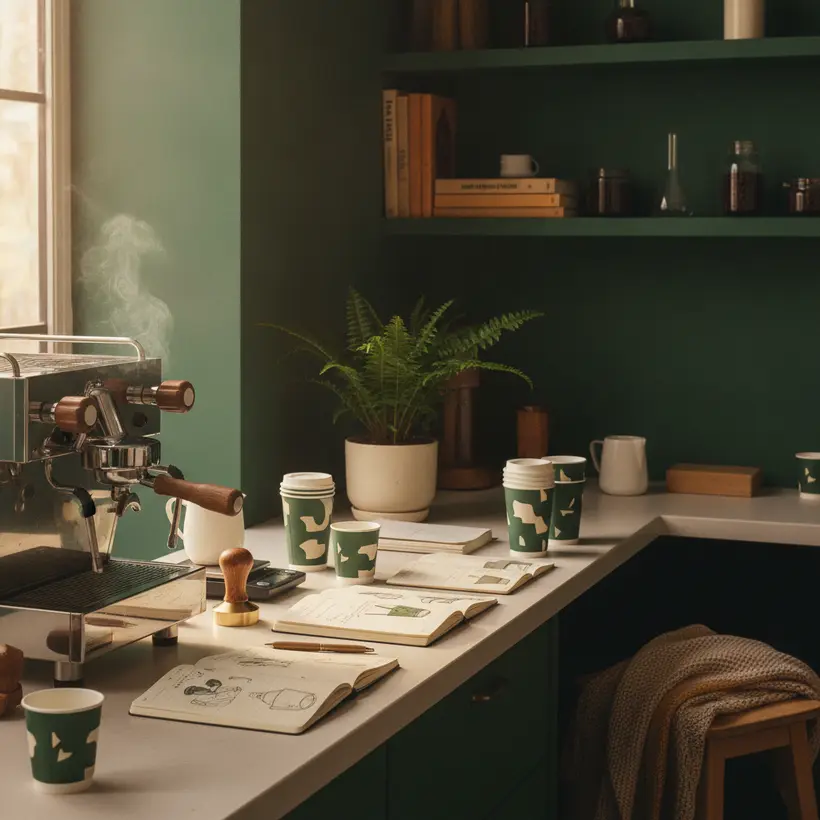
There's a room at our roastery with a fake counter, a real espresso machine, a 3D printer, and a whiteboard that never fully erases. We call it the Tryer Lab, and its only rule is a clock: any idea worth trying should go from napkin to a cup in a real customer's hand in a hundred days or less.
Why the clock matters
Beverage teams can polish a concept forever. The hundred-day clock exists to stop us. A deadline is a design constraint — it forces you to test the risky assumption first instead of perfecting the easy parts. If the drink is going to fail, we want it to fail on day nine, cheaply, not on day two hundred after we've printed the cups.
The mock counter is the secret
Most of what kills a new drink isn't taste — it's the line. A drink that takes four extra steps to make will slow every order behind it, and a barista under a morning rush will quietly stop suggesting it. So we build every candidate on a full-speed mock counter and time it. If it can't be made in the same rhythm as everything else, it doesn't ship, no matter how good it tastes.
A great drink that breaks the line is not a great drink.
3D-printed everything
We print cup lids, foam templates, even drizzle stencils before we ever tool anything for real. It's cheaper to hold a plastic prototype of a bad idea than to imagine a good one. Half the Lab's shelf is failed lids. We're proud of that shelf.
Your order is our lab
The truest research happens after a drink ships. Every customization you make is a small vote about what the menu should become — the Maple Pecan Latte started life as a pattern in the order data. So in a real sense, the Lab isn't just at the roastery. It's every cup you build. Keep building weird ones. We're watching, in the nicest possible way.